
How to Choose an Online Weed Dispensary in BC
Quick Answer: The best online weed dispensary in BC is the one that shows its work. Look for a displayed licence number and store address, working 19+ age verification, packaged-on dates, total THC and CBD figures, and a written return policy. In B.C., legal online cannabis sales run through bccannabisstores.com or a private authorized retailer with an online store. Grades like AAAA are marketing terms, not regulated standards.
Introduction
British Columbia grows a lot of cannabis, and the province’s online retail scene reflects that. Search for an online cannabis dispensary BC residents can order from and you’ll get government sites, licensed shops running delivery, and a long tail of mail-order storefronts all using similar photography and similar adjectives.
Sorting them out doesn’t require insider knowledge. It requires knowing which details are checkable and which are just copywriting. That’s what this guide is for.
What makes an online weed dispensary worth considering?
A handful of factors separate a retailer worth ordering from one worth skipping.
Retailer transparency. British Columbia sets clear expectations here. Cannabis retail websites and apps in BC are required to confirm that users are at least 19 years old, display the official B.C. cannabis retail seal, and show licence information the licence number, the holder’s name, the store’s operating name and its address. The province also publishes guidance on how to recognize legal and illegal cannabis retailers. A site with none of that has told you something before you’ve browsed a single product.
Product information depth. Good listings publish cannabinoid figures, harvest or packaged-on dates, producer names and format details. Thin listings publish a photo and a price.
Selection that matches how you buy. A wide catalogue matters less than depth in the categories you actually use whether that’s dried flower, pre-rolls, concentrates or edibles.
Ordering and support. Working age verification, clear shipping timelines, a real contact channel, and stated payment methods. Cash-only or crypto-only checkout is worth pausing on.
Written policies. Returns, refunds and replacements for damaged or dry products should exist in writing, not as a vague promise.
How can you evaluate cannabis quality online?
You can’t smell a jar through a screen. What you can do is read the listing carefully.
| Listing Detail | What It Tells You |
| Total THC & CBD | Actual potency, ideally stated in mg/g |
| Packaged-on / Harvest Date | Freshness — flower degrades over time |
| Terpene Profile | Aroma, flavour and overall character |
| Producer Name | Whether you can research the grower |
| Strain & Lineage | Rough expectations, not guarantees |
| Bud Photography | Real product shots vs. stock imagery |
| Storage Guidance | Whether the shop handles stock properly |
Two things are worth keeping in mind.
High THC does not mean high quality. A 30% THC figure tells you about intensity, not about cure quality, terpene expression, trim, smoothness or how the flower actually smokes. Plenty of well-grown cannabis sits in the high teens or low twenties.
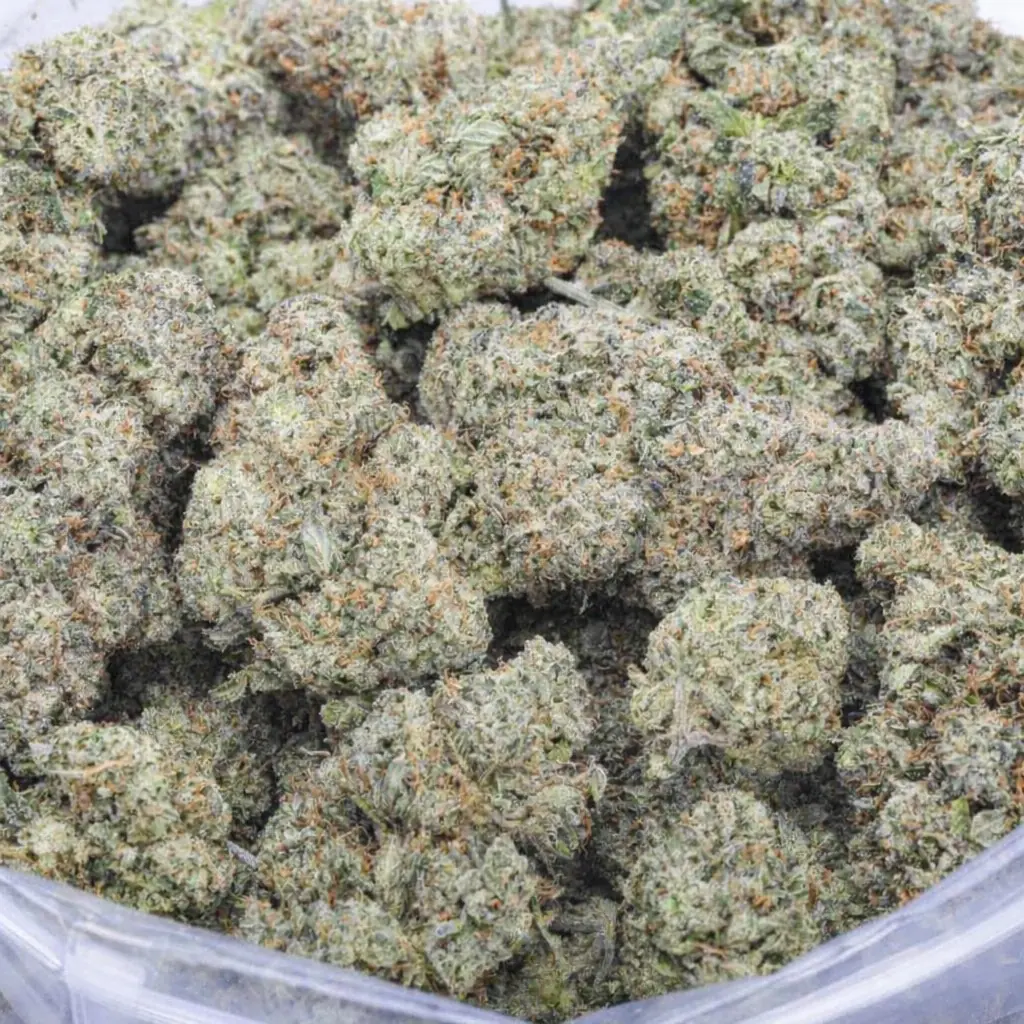
Photos are the weakest signal. Macro shots flatter everything. Consistent, unstyled photography across a whole catalogue is more informative than one glamour shot.
Regulated products carry an advantage that’s hard to replicate. Health Canada notes that legal cannabis is quality controlled, tested for harmful levels of contaminants, tested for accuracy of THC and CBD levels, and can be recalled by the manufacturer, the licence holder or Health Canada if a safety or quality issue turns up.
See what honest, unstyled trichome photography looks like — check our Gorilla Glue #4 listing.
What does AAAA weed mean in Canada?
AAAA is market shorthand, not a federal standard.
The A-scale roughly A, AA, AAA, AAAA and sometimes AAAAA is used across Canadian retail to describe bud density, trim, aroma, appearance and potency. Terms like “top shelf” and “craft” work the same way. None of these tiers is defined, audited or enforced by Health Canada or any provincial regulator.
That means AAAA weed Canada listings are self-assigned. One shop’s AAAA is another’s AAA, and nothing prevents a retailer from grading generously. The scale is useful within a single store, where it reflects that shop’s internal tiering consistently. Across stores it’s close to meaningless.
Look past the grade at the packaged-on date, total cannabinoids, terpene data, the producer’s name, and whether the price sits in a believable range for the category.
How should you compare online cannabis prices?
Price is one input, not the whole answer.
- Normalize to per-gram cost. A $99 ounce and a $35 eighth aren’t comparable until you do the maths.
- Compare within a tier. Value flower against value flower; craft against craft.
- Factor in shipping. Free-shipping thresholds can flip which basket is actually cheaper.
- Read the bulk terms. Ounce and quarter-pound pricing usually assumes you’re fine with a single strain and older stock.
- Treat outliers as information. Pricing far below everything comparable usually reflects age, trim grade, or something about sourcing.
The cheapest option isn’t automatically the worst budget-tier and popcorn bud can be sensible buys. It just isn’t automatically the best value either, particularly if the cannabis arrives dry or the potency doesn’t match the label.
Want the full breakdown of ounce, quarter-pound, and bulk pricing? Read our Bulk Weed Savings Guide →
What should you check before ordering cannabis online?
A short pre-order pass covers most of it.
- Licence details — number, holder name and store address displayed
- Age gate — functioning 19+ verification
- Product details — strain, format, producer, packaged-on date
- Cannabinoid figures — total THC and CBD, clearly stated
- Quantity — exact weight or count per unit
- All-in price — taxes and shipping visible before checkout
- Shipping terms — carrier, timeline, signature requirement
- Support channel — email, phone or chat with a response window
- Terms and policies — returns, refunds, damaged-goods handling
- Packaging expectations — what the label will show on arrival
What are the common red flags?
- No licence number, address or business name anywhere on the site
- Age verification you can bypass by clicking through
- Health claims cannabis marketed as treating a condition
- No packaged-on or harvest dates on any listing
- Potency figures with no producer or lab attribution
- Prices well below the market with no explanation
- Payment limited to e-transfer, cash or crypto
- No written refund or return policy
- Contact details limited to a web form
On that first point, the stakes are documented. Public Safety Canada warns that with illegal online retailers there is no guarantee products will arrive, and that buyers expose themselves to fraud, identity theft or other financial crimes. A B.C. pilot study of cannabis seized from illicit retailers found 24 distinct pesticides in the samples, along with unacceptable levels of bacteria, fungi, lead and arsenic.
Know exactly what a trustworthy online dispensary looks like — read our full Safe Buying Guide
Canadian and B.C. cannabis rules worth knowing
Legal age
Nineteen in British Columbia, and retailers are required to verify it.
Where online sales are authorized
In B.C., legal cannabis can be purchased online at bccannabisstores.com or through a private authorized retailer that operates an online store. The Liquor and Cannabis Regulation Branch maintains a searchable map of licensed cannabis retail stores you can check a shop against before ordering.
Delivery
Since 8 July 2022, licensed cannabis retail stores in B.C. have been able to deliver non-medical cannabis through common carriers such as Canada Post and delivery-service providers. Under the province’s rules for delivering cannabis, orders must be prepared by the licensee or an employee inside the licensed store, and a name and signature are required at handover if they can’t be obtained, the cannabis must not be delivered.
Federal versus provincial rules
Ottawa sets product standards, packaging and labelling under the Cannabis Act. Provinces control retail models, legal age, distribution and delivery. That’s why packaging looks identical nationwide while B.C.’s retail rules differ from Ontario’s or Alberta’s.
Packaging and labelling
Under Health Canada’s packaging and labelling requirements, cannabis products must be in a child-resistant container and labelled with a mandatory health warning message, the standardized cannabis symbol where applicable, and product information including brand name, class of cannabis, THC and CBD information and licence holder details. The standardized symbol — the red octagon is required on the front of products containing more than 10 micrograms of THC per gram. The excise stamp indicates the product came from a Health Canada licence holder, and each province and territory has its own stamp colour. THC and CBD quantities appear twice: as purchased, and once activated by heat.
“Curious how legal, compliant delivery actually works? Read our Safe Buying Guide →
Frequently asked questions
What should I look for first in an online weed dispensary in BC?
Licence information. B.C. retail websites are required to display the provincial cannabis retail seal along with the licence number, holder’s name, operating name and store address, plus working 19+ age verification. If those details aren’t visible, that’s your answer.
Is AAAA weed better than AAA?
Not reliably. The A-scale is informal industry terminology with no regulatory definition behind it. It can be consistent within one retailer’s catalogue, but it isn’t comparable between shops. Judge packaged-on dates, cannabinoid figures and producer information instead.
Does higher THC mean better cannabis?
No. THC percentage measures potency only. Terpene content, cure quality, freshness and trim all shape the actual experience, and well-grown flowers often test lower than the highest numbers on a menu.
How do I confirm a B.C. retailer is authorized?
Check the Liquor and Cannabis Regulation Branch’s map of licensed cannabis retail stores and cross-reference the licence number shown on the website. On arrival, the legal product carries an excise stamp in the province’s colour.
Do I have to be home to receive a cannabis delivery in B.C.?
Yes. A name and signature are required from the person accepting the order. If they can’t be obtained, the cannabis must be returned to the store.
Conclusion
There’s no universal answer to which online weed dispensary BC shoppers should use it depends on what you buy and what you value. But the evaluation process is consistent: check the licence, read the listing for dates and tested figures, compare per gram within a tier, and treat unexplained bargains as a question rather than a win.
Retailers that publish more make themselves easier to judge. That’s usually the signal worth following.
Before your next order, run the shop through the ten-point checklist above. It takes about a minute and filters out most of the noise. Want to go deeper on reading a label? Health Canada’s guide to reading and understanding a cannabis product label breaks down every element you’ll find on legal packaging.